1. Measuring
This deals with the types of quantities that are measured, and the methods of making those measurements. It also discusses why measurement is needed in cookery (and, by implication, science).
2. Properties and Uses of Materials
This looks at the properties (intrinsic characteristics) of materials and how they influence what the materials are used for.
3. Elements, Compounds and Mixtures
The chapter starts with a definition of the terms in the title; however, its main focus is the techniques used for the separation of mixtures and the reasons why they are used.
4. Changes of State (1)
The key concepts of solid, liquid and gas are defined and explained. Examples are included of where a change of state is a key component in the cooking process.
5. Changes of State (2)
This takes a more quantitative (mathematical/numerical) look at changes of state and the effect that the presence of impurities has on them.
6. Physical and Chemical Changes
The ideas of physical and chemical changes are discussed here as well as what defines these terms. These are also sometimes known as reversible and irreversible processes.
7. Acids and Alkalis
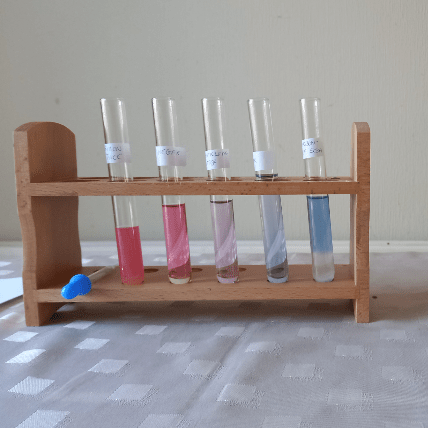
Rather than a theoretical discussion of what makes a substance an acid (or an alkali), the chapter deals with how to show that a substance is an acid or an alkali using food materials. It also refers to the pH scale and explains what is meant by the terms ‘strong’ and ‘weak’ in the context of acids and alkalis.
8. Rate of Reaction
The factors that affect the rate (speed) of a reaction are listed and explained, and the relevance of this to food preservation is discussed.
9. Enzymes
Enzymes are very important both in the food industry and at home. This chapter explains why and gives some examples of simple reactions to show the action of enzymes.
10. Colloids
Many foods are colloids. The chapter gives a brief explanation of these slightly more unusual substances, and a couple of activities showing their formation.
11. Reactivity Series
Metals can be placed into a reactivity series (essentially a league table) according to how reactive they are.
12. Energy
The processes of combustion and digestion are compared. We also look at how the energy in food is measured.
 Science from the Kitchen